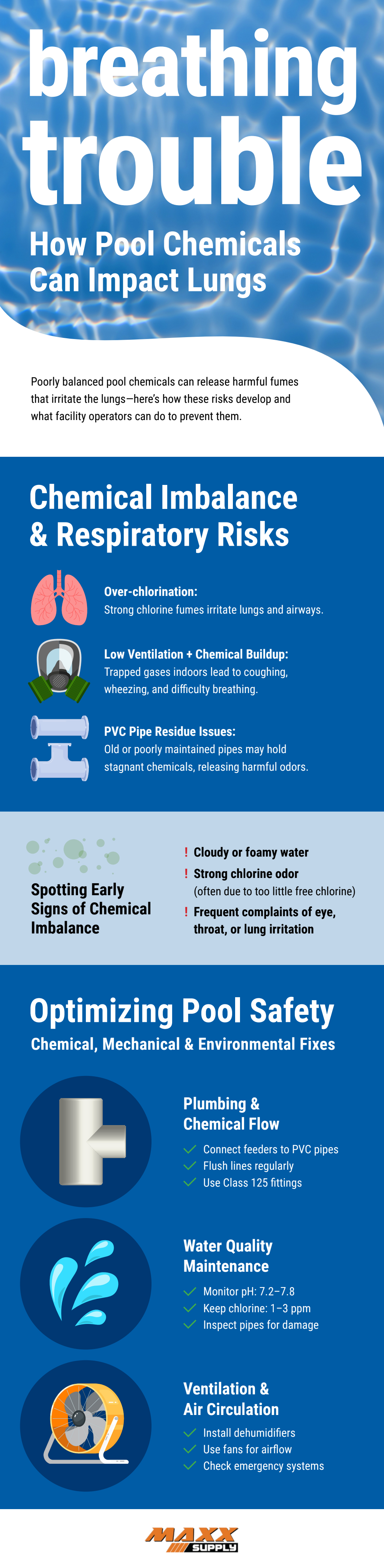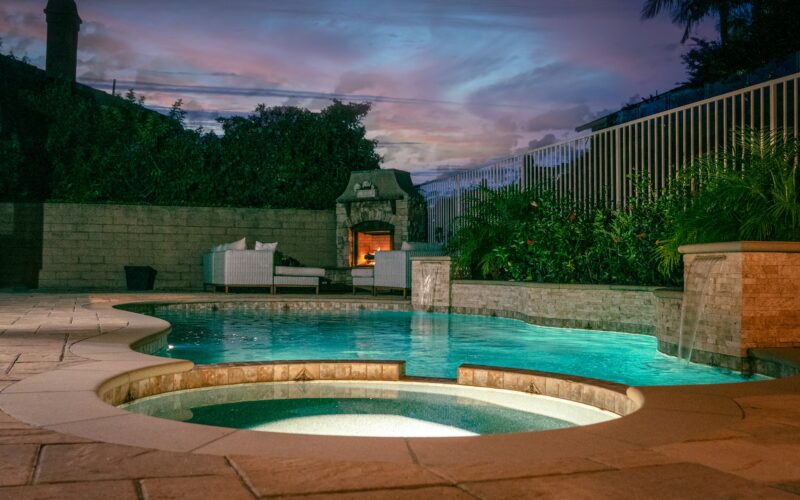
A backyard pool is often seen as an escape—a place to cool off, relax, and bring family and friends together. But enjoying a pool safely involves more than maintaining clean, clear water. The air around your pool can also be affected by the chemicals you use, and when that air becomes compromised, it can impact everyone’s respiratory health.
While most pool owners focus on water clarity or sanitation, chemical imbalances can create airborne irritants that are easy to overlook. Understanding how these issues develop is key to keeping your pool environment healthy.
What Happens in the Air Around Your Pool
When pool safety comes to mind, people usually think about obvious risks. Yet the air directly above the water can contain substances that irritate the lungs, and the problem becomes more pronounced when airflow is limited.
Several factors contribute to poor air quality:
- Overuse of Chlorine
Chlorine is essential for disinfecting water, but excessive amounts can release vapors that irritate the nose, throat, and lungs. Children, swimmers with asthma, and those who are chemically sensitive often feel these effects first. - Insufficient Ventilation
Even properly chlorinated pools can develop air-quality issues if the surrounding space cannot circulate air effectively. In covered or indoor pool areas, chemical byproducts linger longer, increasing the risk of irritation. - Chemical Residue in Plumbing
Aging pipes and fittings sometimes trap leftover chemicals. When temperatures shift or water pressure increases, these residues can produce odors or airborne irritants. High-quality, chemical-resistant components can help prevent buildup.
Signs That Your Pool Area May Be Affecting Your Lungs
Often, the first indicators of a problem are subtle:
• Water that appears cloudy or unusually foamy
• A strong chlorine odor, which typically means disinfectant byproducts are present
• Swimmers complaining of burning eyes, scratchy throats, or coughing
Catching these early warnings allows you to correct issues before they escalate.
How to Improve the Air Quality Around Your Pool
Maintaining a healthy environment means managing both the water chemistry and the equipment behind the scenes.
- Keep Plumbing and Circulation Clean
• Flush system lines to clear residue
• Use compatible Class 125 fittings for chemical stability
• Ensure chemical feeders connect properly to PVC lines for even distribution - Balance the Water Chemistry Correctly
• Aim for a pH level between 7.2 and 7.8
• Maintain chlorine levels between 1–3 ppm
• Perform regular inspections, especially at the start of pool season - Enhance Ventilation and Moisture Control
• Install dehumidifiers for indoor or enclosed pools
• Improve airflow using fans or open structures
• Confirm that emergency exhaust systems function properly
Healthy Air and Healthy Water Go Hand in Hand
A pool can bring years of enjoyment, but it also requires mindful care. By watching for early signs of chemical imbalance, maintaining your plumbing system, and ensuring consistent ventilation, you can create a pool environment that feels refreshing rather than irritating.
Clear water is important—but clean air is just as vital. With a few proactive steps, you can ensure your pool remains a safe, comfortable space for everyone.